
"arabica regions"
7000 article(s) found

Arabica coffee beans hand-brewed Price characteristics Origin flavor description Taste Manor region Introduction
Arabica coffee beans hand-made price characteristics Origin flavor description Manor production area introduction ① Arabica Arabica planting conditions are more stringent, air humidity, regional altitude, soil fertility, sunshine conditions and other high requirements; Arabica coffee beans particles are larger, rich in flavor layers, regional personality. 2. Robusta Robusta on planting conditions

Flavor description of Arabica coffee beans in Latin America introduction to the regional treatment of manor production
Flavor description of Arabica coffee beans in Latin America the planting of coffee trees is only the first step in coffee production. When the coffee fruits are ripe, they can be harvested through picking equipment. Two seeds (Arabica coffee beans) are then extracted from each berry. The last step is to roast coffee beans for consumption. This removes moisture and changes coffee.

How to brew Indian monsoon malaba coffee? History of different regions of India Coffee bean flavor differences
Coffee from the Malabar region of southern India is treated by wind and sun, which will be introduced in the next section of the knowledge popularization and introduction. The acidity of this coffee is low and the taste is very special. Here's how to make this type of coffee. Recommended cooking method: hand brewing filter cup: KONO filter cup water temperature: 87-88C powder amount: 15 g powder water ratio: 1:1

The difference between Arabica and Robusta; introduction to the regional treatment of manor production
Arabica coffee has a varied and broad potential flavor. Arabica coffee produced in different regions, different elevations and different climates usually has its own characteristics and can show a completely different flavor. "Arabica" coffee smells like grass when it is not roasted. After proper roasting, it shows a "fruity" aroma.

Flavor description of Arabica espresso beans introduction to the region of manor production
Arabica espresso bean flavor description taste manor area Arabica coffee trees grow mostly between 900m and 2000 m above sea level; they are hardy, and the suitable growth temperature is 1524 ℃; they need greater humidity, and the annual rainfall is not less than 1500 ml. At the same time, higher requirements for cultivation techniques and conditions are also required. Arabica coffee beans are now mainly grown in South America.

Introduction to the Regional characteristics of Arabica Coffee Bean is Arabica Coffee Bean a High-quality Coffee
Professional coffee knowledge exchange more coffee bean information Please pay attention to the coffee workshop (Wechat official account cafe_style) the common coffee tree species are mainly divided into two main categories, Arabica coffee beans (Arabica) and Robusta (Robusta). There are many small species under it, so we wouldn't say that some kind of coffee is Elaraby.

Uganda Coffee Flavor Taste Features History Arabica Robusta Coffee Bean Region
Uganda is one of the major producers of Robusta coffee beans. Some Arabica coffee is also grown in different highland areas of the country, most notably on the slopes of Mount Elgon on the border with Kenya and Mount Rwenzori, commonly known as the Moon Mountain on the border with Kenya. Some Arabica coffee is also available in the northwest of the country in the West Nile region

Flavor description of Arabica Coffee beans introduction of Regional treatment methods for Manor production
Description of the flavor of Arabica coffee beans the varieties of Arabica coffee beans grown in the manor are introduced in the area where Elaraby grows at an altitude of 600-2200m, a temperature of 150024C and an annual rainfall of 1200mm-2200mm. About 7-9 months from flowering to fruit ripening, its beans are long in shape and have a strong and round wet aroma. Coffee made from Arabica coffee has a strong complex flavor, such as

Is the Guava Plain Manor in the New Oriental region of Guatemala Robusta or Arabica?
Global coffee bean tree species are mainly divided into: Arabica and Canephora, of which Arabica coffee beans account for more than 100 coffee varieties of 70%80%coffee. The more common coffee varieties are: Arabica Arabica, with outstanding personality and unique flavor, is the main force of boutique coffee, mainly used in coffee shop management and high-end coffee market supply; Robsta

Characteristics of regional treatment flavor of Brazilian Katim coffee beans produced by grinding scale
The regional flavor characteristics of Brazilian Katim coffee beans Robusta means strong and healthy. As the name suggests, robusta coffee has better disease resistance than Arabica coffee. Part of the reason is that Robusta coffee has a higher caffeine content and has a stronger inhibitory effect on small pests. Robusta coffee is characterized by higher fruit yield per unit harvest period.

Introduction to the regional treatment method of coffee bean species, characteristics, flavor, taste and manor production
Coffee bean species knowledge, flavor, taste, manor production, regional treatment of all coffee, Arabica coffee accounts for 75%, 80%, its excellent flavor and aroma, making it the only coffee that can be drunk directly among these native species. However, it has low resistance to dryness, frost, diseases and insect pests, especially the natural enemy of coffee, leaf rust, so all producing countries are working hard.

Price characteristics of Arabica concentrated Flavor Coffee beans
The price characteristics of Arabica espresso coffee beans the taste of the manor region introduces that "Arabica coffee" is not the same as "good coffee", and "Robusta" coffee is not absolutely cheap coffee. "Arabica" coffee requires a cumbersome process of hand picking, selection and fine processing, so it is the most expensive in the world, and the best coffee beans are grown in Arabica.

Tebica Coffee Bean Flavor Characteristics Taste Treatment Method Introduction to the region of origin
Arabica coffee is still the most important coffee variety, accounting for about 3/4 of the world's total coffee production. It is cultivated mainly in Latin American countries, but also in Indonesia and the Pacific islands. Brazil, the world's largest coffee producer, has geographical and climatic conditions that are ideal for the growth of Arabica coffee, the main coffee varieties grown

Species of coffee plants growing in different regions of the world
At present, the main species of coffee plants growing in different regions of the world include the following: ARABICA/ROBUSTA/LIBERICA/DEWEVREI/STENOPHILLA/CONGENSIS/ABEOKUTAS/KLAINII/ZAANGUEBARIAE/RACEMOSA. Among them, the most commonly used coffee is divided into three categories: small seed coffee beans (Arabica) and medium seed coffee beans (Robusta).

Introduction of Arabica Coffee Bean Flavor description, Taste characteristics, Regional treatment methods
Arabica Coffee Bean Flavor description characteristics production area treatment Variety introduction Arabica is deeply loved by Chinese people with a short history of coffee contact because of its strong fruity aroma. It was introduced to China by missionaries in the 19th century. It is widely planted in the dry-hot valley of the Jinsha River, which is more than 1000 meters above sea level in Panzhihua, Sichuan and western Yunnan. The temperature difference between day and night in this area is long, and the local people pick it.

Indonesian Coffee Flavor region introduces Arabica Coffee Manor
The main coffee producing area Java, the oldest producing area, continues its reputation from the glorious era of Indonesian coffee in the 18th century. When it comes to Java coffee, it is still reminiscent of quality and delicacy. At that time, the most famous blend was Java coffee with Yemeni mocha. In addition, Java also has a very famous old coffee Aged coffee, or monsoon coffee Monsooned c

Which countries and regions can grow coffee? Why?
Since coffee trees are tropical plants, they need to be planted in warm places. The main planting area is distributed between latitude 25 south and latitude 25 north with the equator as the center, so this area is also called the coffee belt. However, even in the coffee belt, Arabica and Robeska do not grow in exactly the same area, but grow up in an environment that is more suitable for their own growth.

Which countries and regions can grow coffee? Why?
Since coffee trees are tropical plants, they need to be planted in warm places. The main planting area is distributed between latitude 25 south and latitude 25 north with the equator as the center, so this area is also called the coffee belt. However, even in the coffee belt, Arabica and Robeska do not grow in exactly the same area, but grow up in an environment that is more suitable for their own growth.

Description of Flavor of Robusta Coffee Bean during picking period introduction to Regional treatment of planting Environment
Within a year, a typical Arabica coffee tree picks less than 5 kilograms of fruit and can be made into about 1 kilogram of coffee beans Kappi Royale means top grade. at present, there are at least four (and growing) private coffee farms in India to meet the standard of refined Arabica beans.
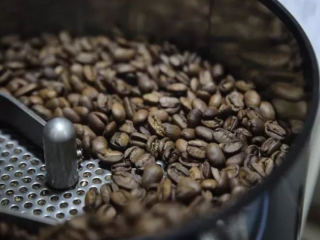
What is the difference between iron pickup coffee beans and Arabica coffee beans? Characteristics of Arabica coffee bean producing area and taste
Iron pickup coffee bean is one of the varieties of Arabica coffee, and the earliest coffee variety found is Arabica. According to biology, coffee varieties are divided into three major varieties: Arabica, Robusta, and Liberika. Arabica coffee is the first kind of coffee discovered by people. Arabica coffee accounts for now.